Physiological Links Between Psychological Stress and Cutaneous Conditions Identified
03/08/2026 / By Coco Somers
Introduction
A 30-year-old female surgical chief resident, facing significant professional pressures, discovered a circular bald patch on her scalp which rapidly expanded into multiple lesions within a month. Clinical examinations, which ruled out systemic causes such as thyroid issues, led to a diagnosis of stress-induced acute alopecia areata [1]. This case, reported in early 2026, underscores a documented connection between psychological stress and the onset of inflammatory skin conditions.
Medical literature has long established that the skin is a prime target for stress responses, serving as a visible indicator of internal imbalance [2]. The field of psychodermatology investigates the interaction between emotional states and skin health, with recent research continuing to clarify the biochemical pathways involved.
Case Report Highlights Stress-Induced Dermatological Onset
The case of the surgical resident, whose alopecia areata coincided with intense professional exams and hospital accreditation pressures, illustrates a direct temporal relationship between a stressful event and dermatological manifestation [1]. Accompanying symptoms included significant scalp redness, swelling, pain and itching – hallmarks of an inflammatory response.
Diagnosis followed the exclusion of other systemic causes, pointing clinicians toward a psychosomatic origin. According to a review of medical literature, acute stress can disrupt the immune protection mechanisms of hair follicles, prompting an immune attack on these structures [1]. This case serves as a clinical example of the established brain-skin axis reported in dermatological studies.
Medical Literature Documents Stress Pathways to Skin Manifestations
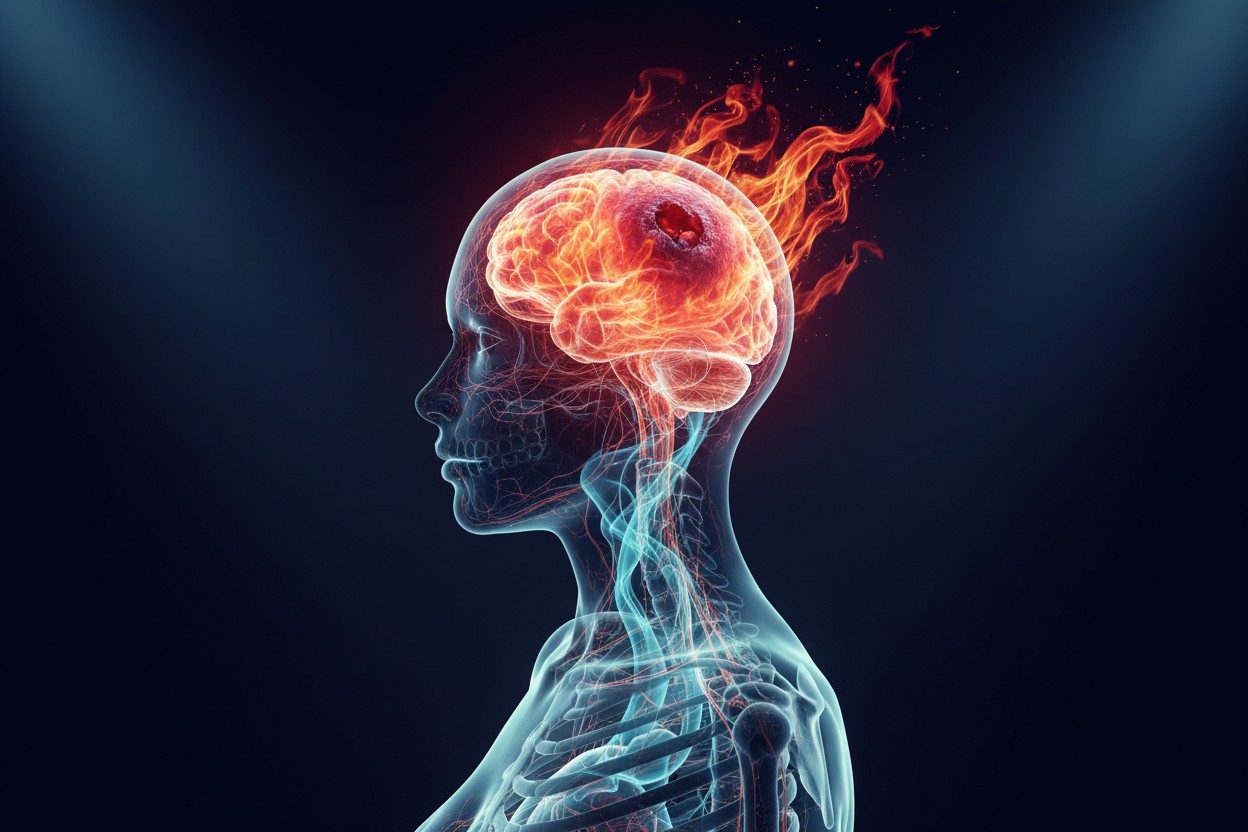
Scientific reviews describe a physiological cascade where stress activates the sympathetic nervous system and the hypothalamic-pituitary-adrenal (HPA) axis, leading to the release of hormones like cortisol [3]. These hormones can directly influence immune function and inflammatory pathways in skin tissue.
According to research cited by GreenMedInfo, primary and secondary lymphoid organs are innervated by sympathetic nerve fibers, making immune tissue directly responsive to signals from the stress-governing nervous system [3]. This neuroendocrine-immune interaction is implicated in various conditions. Studies link psychological pressure to the exacerbation of psoriasis, eczema, urticaria, and acne [4].
Chronic stress elevates pro-inflammatory cytokines such as IL-1 and TNF-?, fostering an environment that can accelerate follicular miniaturization and disrupt normal skin barrier function [5]. The mechanism suggests stress essentially elevates a preexisting ‘adrenal gland–hair follicle axis,’ making it difficult for hair follicle stem cells to function normally [6].
Practitioners Report Observing Stress as a Common Exacerbating Factor
Clinicians in dermatology frequently observe that patient-reported stress levels correlate with disease flare-ups. Many practitioners note that periods of heightened anxiety, major life changes or sustained professional pressure often precede worsening symptoms in chronic conditions like eczema or psoriasis.
A common observation among dermatologists is a clear temporal relationship between stressful events and skin condition exacerbations. This clinical pattern is supported by the understanding that stress hormones like cortisol can perturb epidermal permeability barrier homeostasis, a factor in the pathogenesis of stress-associated skin disorders [7].
Furthermore, some analysts point to the role of chronic inflammation driven by social, lifestyle, and environmental factors in promoting noninfectious chronic diseases that manifest on the skin [8]. The cycle is self-perpetuating, as visible skin conditions can, in turn, generate further psychological distress for patients.
Contextual Factors in Modern Environment May Amplify Effects
Beyond direct psychosocial stress, analysts note that environmental factors in modern life may compound the body’s inflammatory load and stress response. Some advocates for natural wellness suggest that exposure to dietary toxins, synthetic chemicals in personal care products and environmental pollutants can act as additional stressors, influencing inflammatory pathways and potentially worsening skin outcomes [9].
A holistic health perspective, as noted by some commentators, argues that ‘the body’s stress response doesn’t operate in isolation’ from its nutritional and toxicological environment [10]. For instance, chronic dehydration has been identified as a hidden stressor that amplifies the body’s cortisol surge during stress tests, suggesting lifestyle factors like hydration can modulate the overall stress burden [11]. The interplay between psychological state, diet, and environmental exposures creates a complex matrix influencing cutaneous health.
Management Approaches Acknowledged in Clinical Practice
Treatment protocols for stress-aggravated skin conditions are increasingly incorporating integrative strategies. Alongside topical or systemic pharmaceutical interventions, many clinicians recommend stress management techniques. These can include mindfulness practices, which research indicates can influence tendencies toward inflammation and help achieve allostasis — the adaptive activation of neural and neuroendocrine systems [12].
Some patients report improvement with complementary approaches such as dietary modification, targeted nutrient supplementation, and the use of natural botanicals, though evidence for such interventions varies. A research dermatologist was cited stating, ‘Addressing the trigger is as important as treating the symptom’ [13]. This aligns with a holistic model of care that seeks to identify and mitigate root causes, including psychological and lifestyle factors, rather than solely suppressing symptoms.
Conclusion
The documented case of acute alopecia areata in a stressed surgical resident provides a clear clinical illustration of the brain-skin connection. A growing body of evidence delineates the physiological pathways – primarily involving neuroendocrine and immune system interactions – by which psychological stress can manifest as inflammatory skin and hair conditions.
While conventional dermatological treatments remain a mainstay, the observed clinical patterns have spurred interest in more holistic management strategies that address underlying stressors. The integration of stress reduction, nutritional support, and environmental detoxification into therapeutic plans reflects an evolving understanding of cutaneous health as a reflection of systemic, whole-body balance influenced significantly by psychological state.
References
- When Stress Shows on Your Skin: From Sudden Hair Loss to Chronic Inflammation. – The Epoch Times. Ellen Wan. March 3, 2026.
- The Science of Psychoneuroimmunology How Your Psychological States Influence Your Immune Function. – Mercola.com. Dr. Mercola. February 18, 2016.
- Stress Trauma and Autoimmune Disease Its Not All in Your Head. – GreenMedInfo.com.
- Stress may be getting to your skin, but it’s not a one-way street. – Harvard Health Publishing.
- Understanding the Association Between Mental Health and Hair Loss. – PubMed Central.
- How chronic stress leads to hair loss. – Harvard Stem Cell Institute.
- Essential Oil Safety A Guide for Health Care Professionals. – Tisserand Robert Young Rodney-2-1.
- Can Ending Inflammation Help Beat Depression. – Mercola.com. Dr. Mercola. December 14, 2023.
- Essential Oil Safety A Guide for Health Care Professionals. – Tisserand Robert Young Rodney-1.
- Unveiling a Free Holistic Weight and Stress Management Course: Exploring Stress, Metabolism, Toxins, and Dopamine. – Mike Adams. September 04, 2025.
- The Hidden Stressor: How Inadequate Hydration Primes Your Body for Overload. – NaturalNews.com. Willow Tohi. November 05, 2025.
- Therapeutic Benefits of Mindfulness Practices for Mood Disorders. – GreenMedInfo.com.
- Embracing Integrative Medicine: A New Era of Holistic Health. – NaturalNews.com. Kevin Hughes. August 17, 2025.
Submit a correction >>
Tagged Under:
cutaneous conditions, dermatological issues, immune system, immunity, mental, mental health, Mind, mind body science, mindfulness, Psychology, psychosomatic origin, skin care, skin diseases, skin health, stress, stress-induced
This article may contain statements that reflect the opinion of the author
RECENT NEWS & ARTICLES